




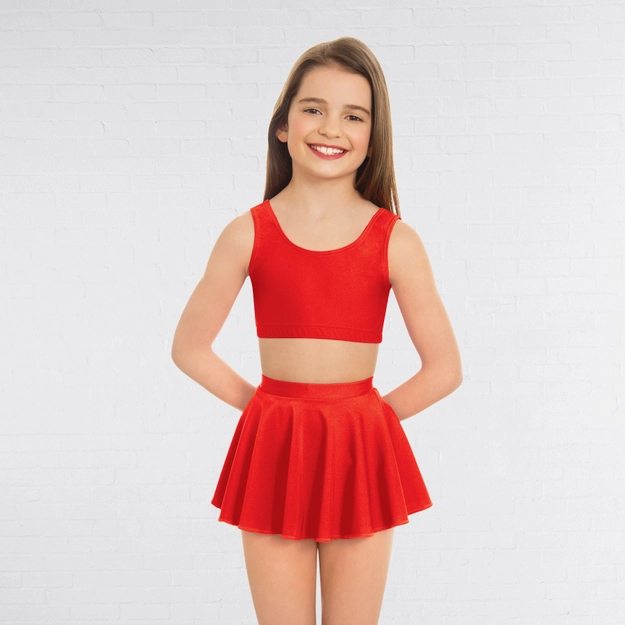
Choosing a crop top for the studio is only half the equation. Knowing how to pair it correctly for a specific class or discipline makes the difference between a look that supports training and one that simply looks good standing still. Dance crop tops have become versatile enough to work across nearly every style of dance, provided the pairing matches both the movement demands and the visual expectations of each discipline.
Ballet training calls for a more streamlined, fitted approach to styling. A simple, structured crop top paired with a fitted camisole leotard underneath, or worn directly over a leotard with a thin strap detail, keeps the silhouette clean enough for instructors to assess alignment and line clearly through the torso. Pairing with high-waisted leggings or a simple skirt maintains the polished, classical aesthetic ballet training typically calls for, while still giving dancers the coverage and support a crop top style provides during barre and center work.
Contemporary and lyrical classes tend to favor a slightly looser, more expressive styling approach. A relaxed or slightly cropped fit paired with wide-leg pants or a flowing skirt allows for the dramatic range of motion these styles demand, while still keeping the midsection visible for the core engagement and fluid torso movement central to contemporary technique. Layering an open, lightweight jacket over the crop top between combinations adds warmth without restricting the visual line instructors need to see during actual movement sequences.
Jazz and commercial dance styles lean into a bolder, more fashion-forward pairing. Crop tops with contrast detailing, mesh panels, or statement colors pair well with high-waisted joggers, bike shorts, or fitted leggings, creating a look that mirrors the energetic, performance-driven quality these styles emphasize. This is also where crop tops most directly reflect current streetwear influence, with dancers often choosing pieces that would look equally at home outside the studio as they do mid-combination.
Hip hop and street-style classes call for a similarly bold approach but typically favor a slightly more relaxed fit through the torso, paired with looser bottoms like cargo pants or joggers rather than fitted leggings. This pairing supports the sharper, more grounded movement quality central to hip hop technique while still allowing the crop top’s breathability advantage to matter during high-intensity combinations.
For dancers training across multiple disciplines in a single day, a well-chosen crop top can transition between these looks with a simple change of bottoms or an added layer, rather than requiring an entirely separate top for each class. This adaptability has become one of the style’s biggest practical advantages, particularly for competitive dancers managing back-to-back classes with limited time to change between them.
Temperature and layering strategy matter across every discipline as well. A lightweight zip-up or an open button layer worn over a crop top between active combinations helps maintain muscle warmth during waiting periods, while remaining easy to remove the moment a routine calls for full mobility. This layering approach works consistently regardless of dance style, making it a useful default strategy for dancers moving between warmup, instruction, and active practice throughout a rehearsal.
Ultimately, the right styling approach comes down to matching a crop top’s fit and coverage to both the technical demands and visual expectations of a specific class, rather than defaulting to a single go-to look across every discipline. Dancers, coaches, and studios building versatile training wardrobes across multiple dance styles can find a full range of crop top options suited to these varied needs at Tiger Friday, where fit, breathability, and style are built with every discipline in mind.
