


Holiday installation work compresses an enormous amount of labor into a short, high-pressure window. Crews are up on ladders and lifts before dawn, working parking lots and commercial storefronts well into low light, often alongside vehicle and forklift traffic moving inventory in and out of a job site. In conditions like these, safety shirts are not simply a compliance checkbox. They are one of the most immediate, practical safeguards a crew has against the struck-by hazards that make up a significant share of workplace injuries in installation and construction environments.
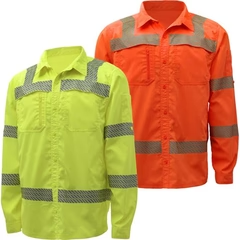
Understanding what actually makes a safety shirt effective starts with the ANSI/ISEA 107 standard, the national benchmark for high-visibility apparel in the United States. Garments under this standard are categorized by Type, based on the work environment, and Class, based on how much visible and retroreflective material the garment includes. For most holiday installation and decorating crews, particularly those working commercial parking lots, loading areas, or sites with vehicle and equipment traffic, a Class 2 shirt typically represents the practical minimum, offering enough background and reflective material to keep a worker visible during daytime hours and in mixed lighting. Crews working later into dusk, in low-light commercial corridors, or near active roadway traffic during setup and teardown should consider Class 3 garments, which include significantly more reflective material and are built specifically for higher-risk visibility conditions.
Seasonal installation work also introduces a scheduling reality that many safety programs don’t fully account for: crews frequently start well before sunrise and finish well after sunset during the shortest days of the year. This makes low-light and nighttime visibility a genuine daily consideration rather than an occasional edge case, reinforcing why choosing the right class of safety shirt matters more for this industry than it might for crews working consistently in full daylight.
Durability under repeated use is another factor that deserves real attention for installation-specific work. Safety shirts worn daily across a multi-week installation season face constant abrasion from ladders, harnesses, tool belts, and repeated loading and unloading of bins and inventory. Fabric quality directly affects how well the garment retains its retroreflective performance over time, since fraying, fading, or damaged reflective striping can compromise the very visibility the shirt is meant to provide. Crews and warehouse managers outfitting teams for the season should prioritize shirts built with reinforced stitching and quality retroreflective tape rated for repeated wear, rather than assuming any ANSI-labeled shirt will hold up equally well across a demanding installation schedule.
Comfort and moisture management also play a meaningful role in crew performance, particularly for installation work that swings between cold early mornings and physically demanding midday labor. Breathable, moisture-wicking fabric blends help crews stay comfortable through long shifts without sacrificing the compliance and visibility the shirt is required to provide, a detail that matters considerably for retention and morale during a physically taxing season.
For warehouse managers and installation companies managing inventory across multiple crews and job sites, standardizing on a consistent safety shirt supplier also simplifies logistics considerably. Consistent sizing, reliable stock availability during peak season, and dependable reorder timelines all matter when outfitting dozens of installers across a compressed, high-demand period where a supply gap can directly delay a job site’s readiness.
Choosing the right safety shirt for holiday installation work ultimately comes down to matching the garment’s class and durability to the specific visibility risks and physical demands of the job, rather than treating all high-visibility apparel as interchangeable. Commercial decorators, professional installers, and warehouse managers preparing for peak season can find a full range of ANSI-compliant safety shirts built for these exact conditions at National Safety Gear, where durability and genuine compliance are treated as equally essential to getting through a demanding installation season safely.